
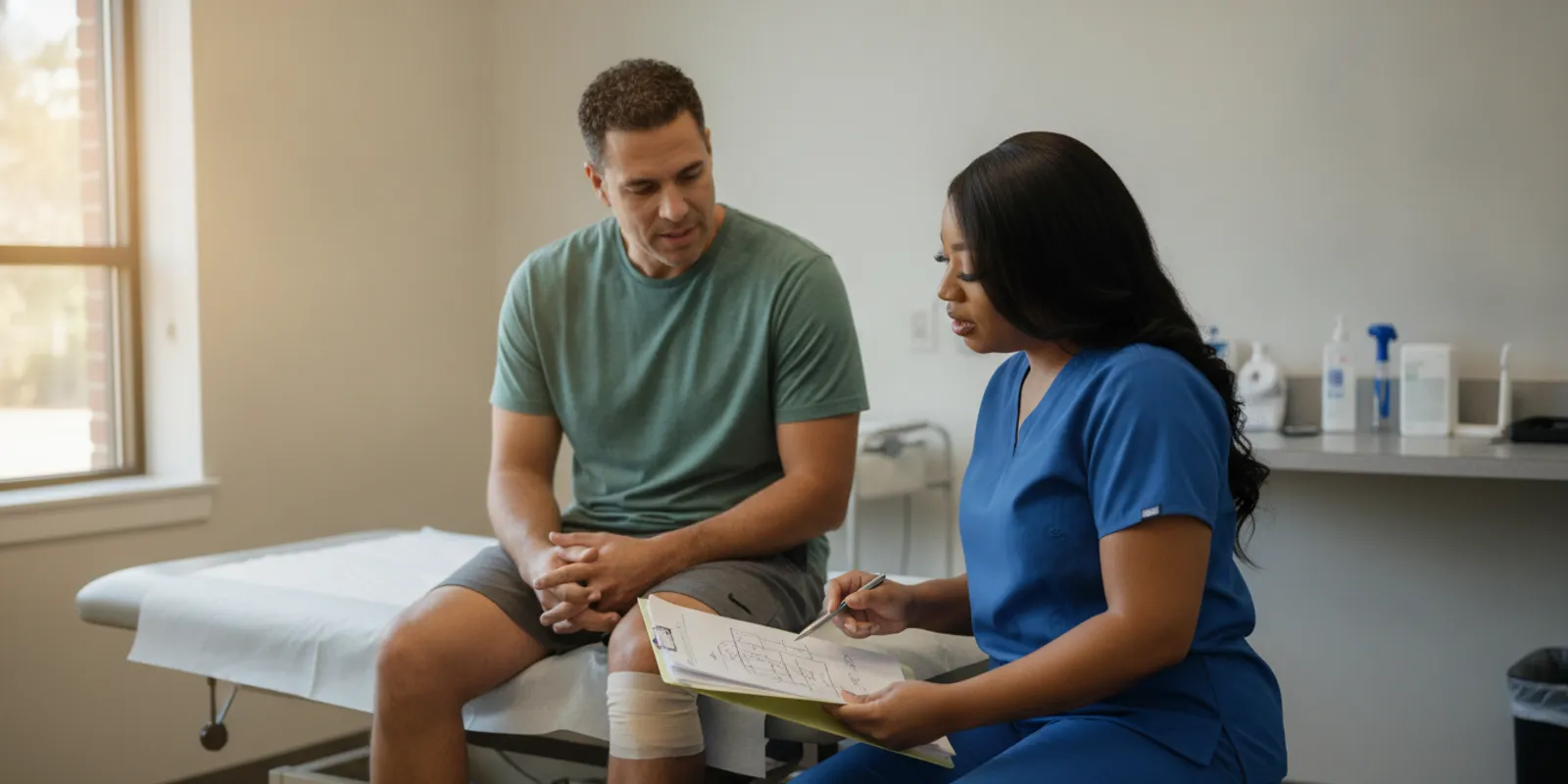
A knee injury can change how you walk, work, drive, and manage daily routines. If it followed a car crash, truck collision, or fall in Georgia, you may be wondering what affects a knee injury settlement in Georgia. There is no single amount that fits every injury. The details of the incident, medical findings, treatment, recovery, and available records all matter.
Request a free, no-obligation case review
Why do knee injury claims differ from one another?
A knee injury is not one uniform diagnosis. A person may have a sprain, torn ligament, meniscus injury, fracture, cartilage damage, or more than one problem. The same label can also describe very different experiences. One person may recover with limited care, while another may need prolonged treatment or face lasting limits on movement.
For that reason, a settlement discussion is not based on the body part alone. The records need to explain what happened, what the injury is, how care unfolded, and how the condition affected the person. The incident type can also shape what information is relevant. A traffic crash and a fall on someone else's property may involve different witnesses, records, and questions about the circumstances.
For general background on the firm's injury practice areas, see the services page. People dealing with a vehicle collision may also find the firm's guide on what to do after a car accident in Georgia useful for organizing next steps.
What injury details can affect the value?
Medical records help describe the type and extent of a knee injury. They may include examination findings, imaging reports, a diagnosis, treatment recommendations, and notes about progress. These details can help distinguish a temporary limitation from a more involved injury, without making any result automatic.
Symptoms and limitations matter in context. Relevant questions may include whether the knee is painful, unstable, swollen, or difficult to bend; whether walking, standing, stairs, or driving are affected; and whether those limits change over time. A provider's notes can help connect these reported symptoms to the clinical picture.
It can also matter whether the injury affects the person's usual activities. For example, someone whose work requires standing may face different day-to-day challenges from someone whose work is mostly seated. Household tasks, caring for family, commuting, exercise, and sleep may also be affected. Clear, dated notes can help keep these changes specific rather than relying on a general statement that life is harder.
How can diagnosis and treatment records help explain the injury?
A useful record set tells a consistent story from the first assessment through follow-up care. Depending on the injury, it may contain emergency or clinic records, imaging reports, specialist notes, physical therapy records, prescriptions, and written work restrictions. Keep copies of bills and insurance statements as well, since they may help explain charges and payments associated with care.
Different documents answer different questions. An imaging report may describe what a scan showed, while a clinician's note may explain symptoms and recommendations. Therapy notes may record movement, strength, and progress over a series of visits. No single document necessarily explains every part of the injury.
A simple record tracker can make the paperwork easier to manage. Use columns for the date, provider or source, document type, what the record relates to, and whether you have a copy. For a bill or statement, note the service date and keep the original document with the tracker. Mark missing items as not yet received instead of filling in details from memory. This makes it easier to see which records you have gathered and which ones may still be needed for a fuller timeline.
Organizing information by date can make gaps or changes easier to spot. If a symptom worsens or a new restriction is recorded, retain the related note and make a brief personal record of what changed. A personal note is not a substitute for medical documentation, but it can help someone remember the timeline when discussing the incident and its effects.
For a broader look at how injury records fit into a claim, read the firm's overview of damages in a Georgia personal injury case. This article is general information; a person's records and circumstances are individual.
What role does the recovery timeline play?
The length and course of recovery can affect how the injury is understood. Some knee problems improve over a relatively short period. Others involve continuing care, changing recommendations, or limits that persist. Records showing appointments, recommendations, progress, and ongoing symptoms provide a more complete picture than a single snapshot.
When care is interrupted, there may be many explanations, such as scheduling, transportation, work, or a change in symptoms. A timeline that notes what happened can help avoid confusion later. If a clinician recommends follow-up or therapy, keep the written instructions and appointment records. Decisions about treatment belong between the patient and their healthcare provider.
Do not assume that a claim can be resolved accurately before the nature and course of an injury are understood. Timing and deadlines can depend on the circumstances. The firm's article on Georgia car accident claim deadlines discusses why timing deserves attention in a traffic-injury matter; it is not a substitute for checking the deadline that applies to a particular situation.
How can work and everyday limitations be documented?
A knee injury may affect more than medical appointments. It can interfere with walking through a work site, lifting, standing for a shift, commuting, or completing tasks at home. The impact depends on the person's activities and the injury, so concrete examples are more useful than broad descriptions.
- Keep a simple dated note of activities that became difficult and how the limitation affected them.
- Save written work restrictions and communications about missed time or modified duties.
- Retain relevant wage or attendance records if time away from work occurred.
- Note changes in mobility, such as difficulty with stairs or longer walks, and when they improve or worsen.
These records do not determine an outcome on their own. They help show the practical effects alongside medical information. Avoid exaggerating or guessing; a clear account of what changed is easier to understand and compare with the rest of the record.
Does the type of incident change what information matters?
The injury may be similar, but the incident details can differ. In a vehicle collision, relevant material may include the crash report, photographs, witness information, vehicle damage records, and communications with insurers. The firm's resource about what to do after a car accident in Atlanta covers practical ways to keep information organized after a crash.
After a truck collision, the vehicles, parties, and available records may be different from those in a passenger-car crash. The firm's overview of truck accident causes and responsibility in Georgia provides context about why these incidents can have distinct details.
For a fall, the location and conditions where it happened may be important. Photos, incident reports, witness names, and information about the area may help preserve a record of the scene. For more on this type of incident, see the firm's Georgia premises liability guide and its discussion of slip-and-fall matters in Georgia.
In every situation, the responsible party and available evidence depend on the facts. A collision or fall alone does not establish who is legally responsible. Keep original records where possible and note when and how photographs or documents were obtained.
Which factors may be considered together?
The table below summarizes common categories of information that may help describe a knee injury. It is not a formula or a prediction of a particular settlement.
| Factor | Examples of information | How it can add context |
|---|---|---|
| Diagnosis and findings | Examination notes, imaging reports, specialist records | Describes the condition and the clinical findings |
| Care and recovery | Treatment records, recommendations, therapy notes, follow-up | Shows the course of care and documented progress or continuing issues |
| Daily and work effects | Restrictions, attendance records, dated notes about activities | Explains practical limitations in the person's own circumstances |
| Incident information | Photos, reports, witness details, location information | Helps describe how and where the event occurred |
| Related expenses | Medical bills, receipts, insurance statements | Helps organize documented expenses connected with care |
What can make the information harder to understand?
Missing dates, scattered records, and unclear descriptions can make it difficult to follow what happened. So can confusing symptoms from different periods or keeping only a summary instead of the original record. A small amount of organization can make a large packet easier to review.
- Create a date-ordered list of the incident, appointments, imaging, treatment, and major changes.
- Store bills separately from clinical records, and keep copies of both.
- Use a short, factual description for each daily limitation rather than a broad conclusion.
- Keep claim-related letters and messages together, with the date received or sent.
Be careful not to treat an early estimate or an isolated record as the complete picture. The available information can change as care continues or additional records are obtained. Questions about a specific claim depend on its facts and should be discussed with a qualified professional.
How can you prepare for a conversation about a knee injury?
Before an initial conversation, it may help to gather the date and location of the event, a short account of what happened, the names of treating providers, and any photographs or documents already available. You can also list the main questions you want answered. It is fine to note information you do not yet have rather than trying to fill gaps from memory.
The Law Office of Laquetta S. Pearson represents injured people in Atlanta-area motor vehicle, truck and tractor-trailer, and premises liability matters. The firm reports millions of dollars recovered for clients; past outcomes do not guarantee a similar result. Learn more about Laquetta S. Pearson and the firm, or review the firm's overview of what to expect during a free case review.
For general information about finding legal resources in Georgia, the State Bar of Georgia is a professional association resource. Information on an organization’s website does not resolve the facts of an individual matter.
Request a free, no-obligation case review or call the office at (404) 627-2811.
Frequently Asked Questions
Is there a typical knee injury settlement amount in Georgia?
There is no one amount that applies to every knee injury. The diagnosis, treatment, recovery, documented limitations, incident facts, and other circumstances can differ from person to person. A published example cannot predict the result in another matter.
Does an MRI determine the value of a knee injury claim?
An MRI or other imaging may be one part of the medical record, but it is not the whole story. Clinical findings, symptoms, care, recovery, and effects on daily activities can also provide context. The meaning of a test result depends on the individual medical picture.
What records should I keep after a knee injury?
Keep copies of medical records, imaging reports, treatment recommendations, bills, insurance statements, work restrictions, and relevant incident information. A simple date-ordered timeline can make those records easier to follow. Ask healthcare providers for copies through their usual records process.
Can I discuss my claim before treatment is finished?
You can ask questions about the process while treatment continues. How a continuing injury may affect a particular claim depends on its facts and the available information. Avoid assuming that an early snapshot reflects the eventual recovery or outcome.
Each knee injury and recovery is different, so the records and circumstances matter.