
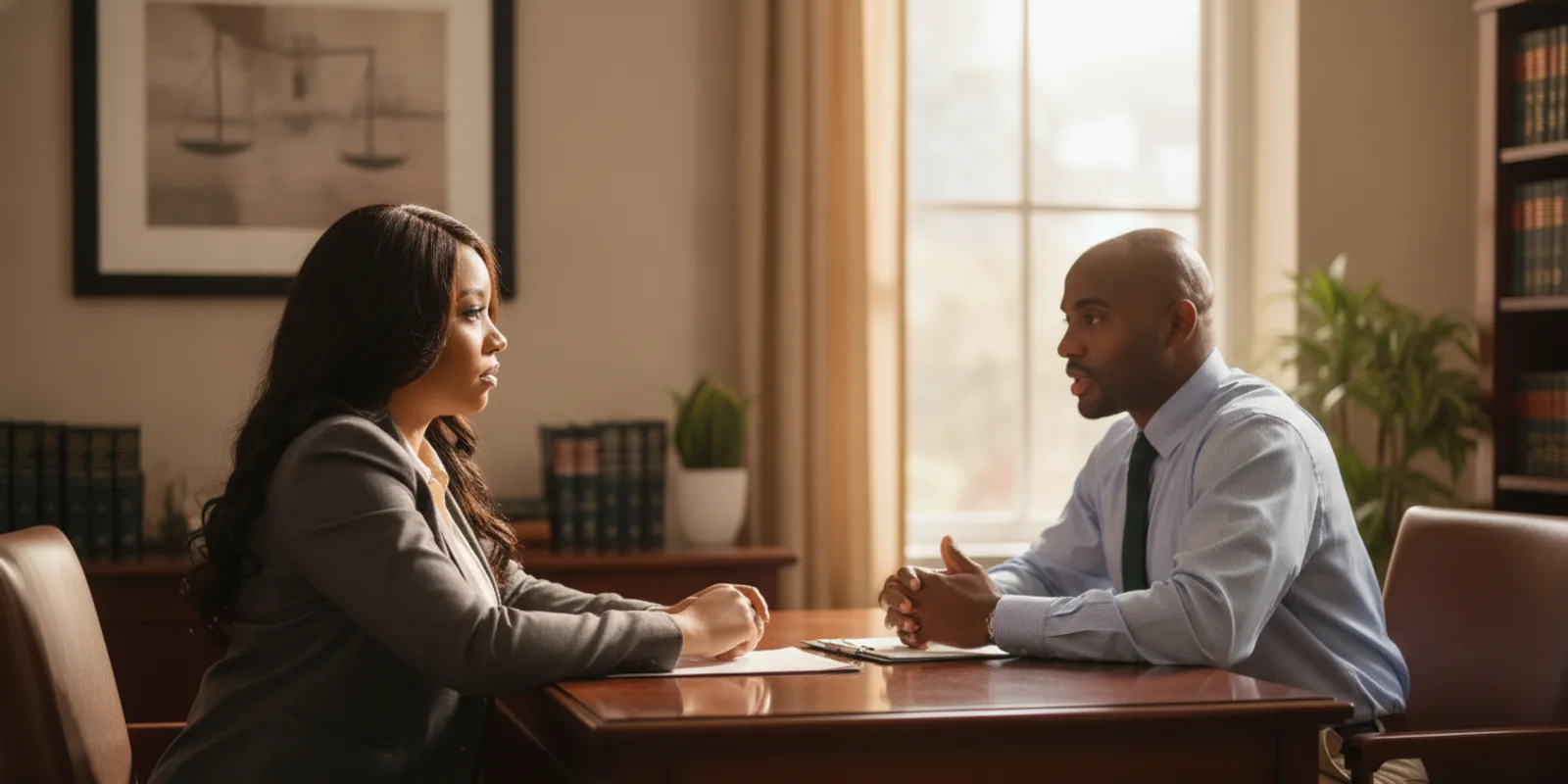
After an accident, it can be difficult to know what to do next or what to ask. A Georgia injury lawyer can explain how a potential personal injury matter is handled and what information may help the firm understand what happened. This guide offers practical questions and ways to prepare, without trying to predict the result of any particular matter.
Call (404) 627-2811 or request a free, no-obligation case review to talk through your situation.
What should you ask a Georgia injury lawyer first?
Begin with questions that help you understand the attorney's role, how you will communicate, and what may happen after an initial discussion. You do not need to arrive with every record or a perfectly complete account. A short list can help you use the conversation well.
Ask who will talk with you, how updates are shared, and what the next step is. Those three points are the most useful part of a first conversation.
- Who would be my main point of contact?
- How will updates be shared, and how can I ask a time-sensitive question?
- What information would help your team understand the incident?
- What are possible next steps after we speak?
- What should I do if I remember an additional detail later?
- Are there records I should preserve or avoid changing?
Ask the attorney to explain unfamiliar terms in plain language. It is reasonable to take notes, pause to clarify a point, or ask for important instructions in writing. If you are speaking with more than one firm, use the same questions each time. That lets you compare the clarity of the answers and the communication process, rather than making assumptions based on a brief conversation.
You can learn about the firm's personal injury services and background before contacting its team. Reading those pages is optional. You can still ask basic questions directly.
How can you prepare a clear account?
Write a brief timeline while your memory is fresh. Start with the date, approximate time, location, and what you remember happening immediately before, during, and after the incident. Identify people who were present if you know their names. If a detail is uncertain, mark it as uncertain instead of filling the gap with a guess.
Write only what you saw, heard, or did, and label anything you are not sure about. A short accurate note is more useful than a polished story.
Separate what you personally observed from what another person told you. For example, note "I saw the vehicle move into my lane" separately from "a witness later said the signal was red." This distinction helps keep your account precise. It also makes it easier to identify which details may need confirmation.
Use details relevant to the event. For a vehicle collision, note the direction of travel, road and weather conditions, vehicles involved, and any exchange of information. For a fall, describe the location and condition you observed, along with when you first noticed it. For a dog bite, record where it happened and what you remember about the animal and circumstances. These notes are a memory aid, not a conclusion about responsibility.
If a timeline feels overwhelming, make a first pass with only five entries:
- When you left or arrived.
- When the event occurred.
- When you first sought help.
- Who you spoke with.
- What happened next.
Add details later, and label each addition with the date you wrote it. Do not try to make the account sound persuasive. Accuracy and clear uncertainty are more useful than polished wording.
Which records and materials might be useful?
Keep items related to the incident together, but do not postpone asking questions because something is missing. Depending on what happened, potentially useful materials may include:
- Incident or crash report information, if available.
- Original photographs or video of the scene, vehicles, or a visible condition.
- Names and contact details for witnesses, if known.
- Medical visit dates, discharge paperwork, and instructions you received.
- Messages or letters from insurers or other people involved.
- A basic record of missed time and changes to ordinary activities.
- Receipts or other documents related to expenses you are tracking.
Keep original photos, reports, and messages, and do not edit them. You can still ask questions if one of those items is missing.
Save original files when possible. Note when and how a photograph or document came into your possession. Do not edit an image or add assumptions to an existing report. If documents arrive in several formats, keep the originals and make a simple list of what each file is. Avoid sending sensitive records through a channel until you have confirmed that it is an appropriate way to share them.
For a vehicle incident, a report number can help locate a record later, but you may not have every document at the outset. The firm's guide to what to do after a car accident in Georgia covers related practical steps. For other situations, the firm also discusses Georgia slip-and-fall matters and Georgia dog-bite laws.
How should you keep track of injuries and daily effects?
Health concerns belong with qualified medical providers. Seek appropriate medical attention and follow the instructions you receive. An attorney cannot diagnose an injury, and notes about symptoms are not a substitute for medical care.
See a medical provider for health concerns, and keep a dated factual note of how daily tasks change. That note is a memory aid, not a diagnosis.
If it is useful to you, keep a dated, factual record of symptoms and how they affect ordinary activities. You might note when a symptom began, whether it changed, what task was difficult, and whether you contacted a provider. Avoid drawing medical conclusions or trying to prove a point in the log. "Could not carry groceries upstairs on Tuesday" is a concrete observation. A diagnosis should come from a qualified professional.
Keep appointment dates, provider names, and copies of instructions or records in one place. If symptoms change, record when you noticed the change and what happened. Do not alter medical records or delay care to create documentation. If you do not remember an exact date, say so rather than selecting one at random.
Internal symptoms, such as pain, dizziness, or trouble with an ordinary task, can be easy to overlook in the first days. Write down when you first noticed the change and whether you contacted a provider. Do not decide on your own what the symptom means. A Georgia injury lawyer can explain which factual details may help the firm understand the sequence of events, while your medical providers address the health concern itself.
What questions apply to different kinds of injury matters?
The questions to explore depend on the event. A collision may involve accounts from multiple drivers, insurance communications, and evidence about how the crash occurred. A truck collision may involve additional records and parties. A property incident can prompt questions about the condition and the circumstances in which it was noticed. A dog-bite matter may turn on its specific circumstances and applicable Georgia law.
Ask which facts matter for your type of incident instead of assuming every matter follows the same path. A vehicle collision, a fall, and a dog bite can raise different questions.
These differences are a reason to ask what facts and records matter in your own situation, rather than assuming that another person's experience will be the same. You can ask which types of issues the firm handles and whether the next discussion should include a particular document or person. The firm's truck accident guide provides additional background on one distinct topic. The firm represents people injured in motor vehicle, truck and tractor-trailer, premises-liability, and dog-bite matters.
How can Georgia law affect what you ask?
Georgia statutes and the facts of an incident can matter, and legal rules may depend on the kind of claim and the people involved. A general article cannot determine how a rule applies to a reader's circumstances. Rather than relying on a summary or an online comment, ask the attorney which legal questions are relevant and what information is needed to address them.
Ask whether any deadline or notice date should be checked, and bring the document that mentions it. Do not assume every matter has the same timeline.
For example, you might ask whether a deadline or notice requirement should be checked, what facts could affect the process, and whether there are separate insurance procedures to understand. Do not assume that all matters share the same deadline or process. If a date is uncertain, explain that and ask how to confirm it. The Georgia General Assembly website is an official source for Georgia statutes. An official source does not replace an explanation of how a provision may relate to a particular situation.
Bring any letter or document that mentions a response date, and point out the date when you received it. Keep the envelope or electronic message details if they help establish when it arrived. Do not ignore formal notices while trying to interpret them on your own. Ask the firm how to route the document securely and whether a prompt follow-up is needed.
What should you clarify about insurance communications?
If an insurer or another involved party contacts you, keep a copy of the message and note when it arrived. You can ask the attorney how to handle communications in your circumstances and whether there is anything you should preserve. This article does not advise you to make or refuse a particular statement, sign a document, or accept or reject an offer.
Save the message, note the date, and ask before you reply, sign, or share personal information. Verify the sender before you click an unexpected link.
Before sharing personal information, verify who contacted you and use contact details from a trusted source. If you are uncertain about an unexpected link or request, do not click it until you have confirmed its source. Ask the firm which channel to use for documents and whether ordinary email or text is appropriate for sensitive information.
Keep a basic communication log: date, name or organization, method of contact, what was requested, and what you did next. Record unanswered questions too. This can prevent repeated explanations and help you tell the attorney which matters need follow-up. For more on the topic, see the firm's guide on communicating with an insurance adjuster.
How can you compare next steps during a first conversation?
The table below is a preparation aid, not a prediction or legal assessment. Use it to identify the topics you want to cover and the information you already have.
Use the table to see what you already have and what you still need to ask. It is a checklist, not a prediction of any result.
| Topic | What to gather or ask | Why it can help |
|---|---|---|
| Incident | Date, place, basic timeline, and people involved. | Creates a clear starting point and highlights uncertain details. |
| Health | Visit dates, instructions, and factual symptom notes. | Helps describe the sequence of care and daily effects. |
| Evidence | Original photos, reports, witness details, and messages. | Identifies materials that may need to be preserved or reviewed. |
| Communications | Letters, contact dates, requests, and response dates. | Helps explain what has already been discussed. |
| Process | Who will communicate, how to send records, and what happens next. | Sets expectations for practical follow-up. |
You can also ask what remains unknown and what would help clarify it. If you need time to review an explanation, say so. Ask who will follow up, how to reach that person, and whether you should expect a written summary of any requested next steps. A clear process matters because it lets you know where to direct questions rather than trying to interpret every development alone.
How do you choose a Georgia injury lawyer to speak with?
When deciding whom to contact, focus on whether the lawyer's experience and communication process fit the type of incident you want to discuss. Ask how the attorney stays involved, who handles routine communication, and how the firm explains important developments. You can ask what kinds of matters the firm handles without expecting a general website article to resolve your individual circumstances.
Choose a Georgia injury lawyer you can understand, and confirm who will follow up and how. Clear answers matter more than a polished first impression.
Notice whether the answers address your questions directly and whether unfamiliar language is explained. You should be able to ask for clarification without feeling rushed. If you have a preference for phone, email, or written follow-up, state it and confirm the correct contact method. The Law Office of Laquetta S. Pearson lists its office number as (404) 627-2811.
You may also review the firm's Atlanta personal injury FAQ and its guide to how to choose a personal injury lawyer in Georgia. Its explanation of how a personal injury lawsuit works in Georgia is another useful starting point.
Before ending the conversation, repeat back any practical next step you understood and ask whether you missed anything. If the firm requests a document, confirm which document, how to send it, and whether a copy is sufficient. Keep a written note of the answer. This small check can reduce confusion later, especially when you are managing appointments, recovery, and messages at the same time.
Laquetta S. Pearson has 23 years of experience practicing Georgia law, and the firm's attorneys have a combined 43 years of experience. The firm has reported recovering millions of dollars for clients. That history is not a guarantee of any result. Offices are at 612 Moreland Ave. SE, Atlanta, GA 30316, and 1820 The Exchange SE, Suite 250, Atlanta, GA 30339.
When you are ready, call (404) 627-2811 or request a free, no-obligation case review. Form requests go to the firm by email.
Frequently Asked Questions
What should I bring to an initial conversation?
Have any timeline, records, photos, messages, and incident details you already possess available. You can also bring a list of questions. Missing information does not prevent you from asking how to proceed with a conversation.
Should I wait until I know the full extent of an injury?
Do not delay appropriate medical care. If you have questions about a possible legal matter, you may ask about the process while your health care providers address medical needs. The timing and relevant facts can vary.
Do all accident matters follow the same steps?
No. The facts, insurance arrangements, and legal issues can differ by incident. A vehicle collision, a fall, and a dog bite may raise different questions, so ask which issues matter to your circumstances.
How can I contact the firm?
You can call the office at (404) 627-2811 or use the online request form. Confirm the appropriate channel before sending sensitive information.
Organizing a few accurate notes and asking direct questions can make a first conversation more useful. The firm's team can then explain what information may be relevant to your circumstances.