
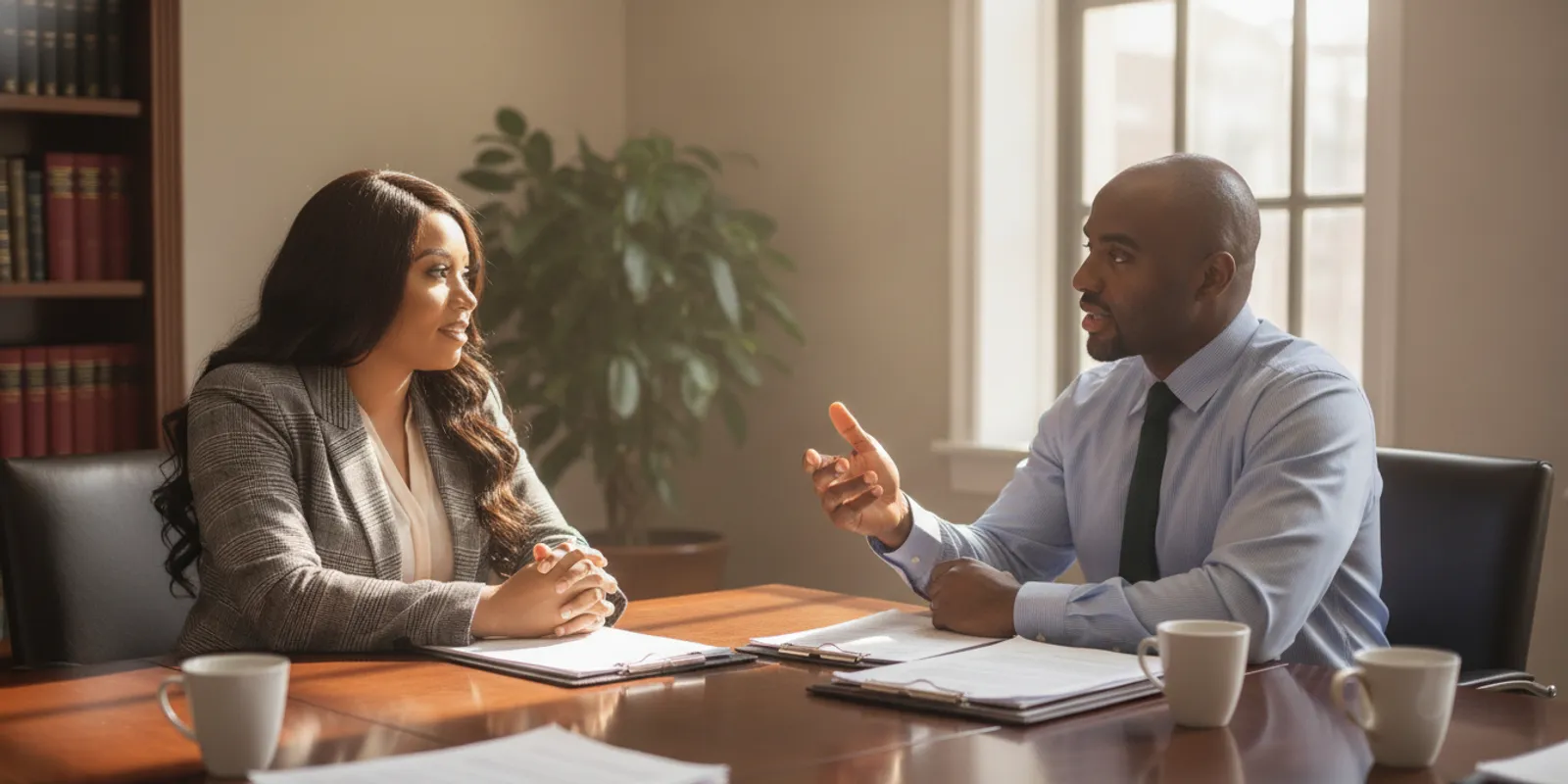
After a collision, it can be hard to know what to ask or which details matter. If you are looking for a car accident attorney in Atlanta, preparing a short list of questions can make the first conversation more focused. You do not need to know legal terminology or have every record in hand before asking how the process works.
Request a free, no-obligation case review
What should you ask first?
Begin with practical questions about the crash, the information to preserve, and how communication works. A first discussion is an opportunity to explain what you remember and hear what additional details may be useful. It is reasonable to ask for plain-language explanations, especially when an unfamiliar term or document comes up.
- What information about the collision would be useful to share first?
- Who would communicate with me, and how can I reach that person?
- What records should I gather now, and which can wait?
- How will I know when the firm needs more information?
- What should I do when an insurance representative contacts me?
- What are the next steps after this conversation?
Write the answers down, including any requested follow-up. If you do not understand an explanation, ask for it to be restated in everyday language. You can also ask whether you should send information through a particular secure channel rather than relying on memory or scattered messages.
How can you prepare a useful crash timeline?
A short, factual timeline can help you tell the story in order. Start with the date and approximate time, the road or intersection, your direction of travel, and what you remember happening just before impact. Continue with what happened afterward: whether vehicles moved, who called for help, what you observed, and when you first noticed any physical effects. Mark estimates as estimates. Do not fill gaps with guesses.
For example, instead of writing “the other driver was speeding,” record what you actually observed: “I was traveling east; the other car entered the intersection from the right; I heard a horn just before impact.” If you later remember a detail, add the date you added it. Keeping observation separate from conclusion can make your account clearer.
Note witnesses, responding agencies, nearby businesses or cameras you noticed, and any weather or road conditions that you recall. If your memory is uncertain, say so. An honest timeline can include unanswered questions; it does not need to read like a final report.
Which records and materials should you organize?
Gather what is already available, but do not delay a conversation because a report or bill has not arrived. A basic folder—paper or digital—can reduce the time spent searching later. Consider keeping:
- Crash report details or an incident number, if available.
- Photographs of vehicle positions, damage, road conditions, and visible injuries.
- Names and contact information for drivers, passengers, witnesses, and responding agencies.
- Dates of medical visits and records you already possess.
- Insurance company names, claim references, letters, emails, and call notes.
- Receipts or notes for transportation and other costs related to the crash.
- Repair estimates, towing information, and vehicle-related correspondence.
Preserve original photographs and messages when possible. Avoid editing images in a way that changes the original, and keep a backup copy in a secure location. Give files simple names, such as “intersection-photo-date” or “insurer-letter-date,” and maintain a brief index. If a record is missing, make a note of who may have it and when you requested it.
When sharing sensitive records, ask how they should be transmitted. Do not send private documents through an unfamiliar link or channel without confirming it is appropriate. A simple inventory can show what you have, what you are waiting for, and what questions remain.
How should you keep track of injuries and daily effects?
People may remember the impact but overlook how the days afterward changed. Keep brief, dated notes about symptoms you experience, appointments, activities that became difficult, and questions for a health professional. Describe concrete effects: for instance, note that you had to ask for help carrying groceries or missed a planned activity, if that is accurate. Avoid exaggerating or trying to diagnose yourself.
Medical questions belong with a qualified health professional. An attorney conversation is not a substitute for medical care. Seek appropriate medical attention for health concerns and follow the guidance of your treating provider. Store appointment summaries and instructions with your other records, but keep a separate personal log so that a simple day-by-day account is easy to review.
If you have not yet received a record, write down the provider and visit date rather than trying to reconstruct details from memory. If your symptoms or routine change, update the log with the date and what changed. This careful approach can help you describe your experience without making assumptions about cause or outcome.
What should you clarify about communication?
Ask who your main point of contact will be, which phone or email channel to use, and when to expect updates. If you prefer written information, say so. Find out how to send new records and how the firm will confirm receipt. It can also help to ask what kinds of developments deserve a prompt message and what can be saved for a scheduled update.
Keep a contact log with the date, name, topic, and any promised follow-up. After a call, write a short summary while it is fresh. For example: “Tuesday—sent photos; asked to locate report; will check back after receiving it.” This is not a legal conclusion; it is a practical reminder system. If your availability changes, tell the point of contact how and when you can be reached.
You can review the firm's personal injury services for a general overview. Its About page provides background on Laquetta S. Pearson, and its guide to car and truck accident injury claims in Atlanta offers related context.
How can you handle insurance communications thoughtfully?
Keep copies of letters and emails, note dates and names from calls, and record any claim number or stated deadline. Ask the attorney how to preserve communications and where to send them. If someone asks you to provide a document, note exactly what was requested and when. If the request is unclear, ask for clarification rather than assuming what it means.
A useful call note has four parts: who contacted you, the date and time, the subject, and the next action requested. Save voicemails or written messages when possible. Do not treat a brief conversation as a complete resolution of every issue. If you receive a release, form, or other document you do not understand, ask what it is and what response timing applies before making assumptions.
Georgia law and insurance arrangements can affect motor vehicle claims, and the details matter. The Georgia General Assembly website provides access to state law, but general online information cannot determine how law applies to an individual event. For a broader local overview, see the firm's steps after an Atlanta car accident.
Which questions help you understand the process?
In addition to asking what to gather, ask what the next stage may involve and what remains uncertain. You might ask:
- What information do you still need to understand the sequence of events?
- How will updates be shared, and how often should I check in?
- Should I keep sending new records as they arrive?
- What should I do if my contact details or availability changes?
- Are there dates or documents I should make sure to track?
Listen for a clear explanation of what is known, what is not yet known, and what action—if any—you should take next. A careful answer may identify questions that require more information rather than promise a particular result. Keep those open items on your list and ask who will follow up on each one.
For context on timing, read the firm's Georgia car accident deadline overview. Deadlines and exceptions can depend on circumstances, so use a qualified attorney to address timing questions about a specific situation rather than relying on a general article.
How can you compare topics during the first conversation?
A compact checklist helps you cover the basics without turning the conversation into an interrogation. Choose the topics most relevant to your situation, then add questions that arise as the discussion unfolds.
| Topic | Question to ask | Useful item to have nearby | Follow-up note |
|---|---|---|---|
| Crash sequence | Which details should I explain about how it happened? | Date, location, brief timeline | List facts you are unsure about |
| Injuries and care | Which records or dates might help describe care so far? | Visit dates and available records | Track records still being requested |
| Insurance | How should I share calls, letters, or claim information? | Insurer names and correspondence | Record dates, names, and requests |
| Communication | Who should I contact and by what method? | Preferred contact method and availability | Write down the next update plan |
| Next steps | What should I organize or watch for next? | Notebook or secure digital folder | Assign each open item a reminder |
What should you consider when choosing an Atlanta attorney?
Consider whether the attorney listens, explains unfamiliar terms plainly, and answers practical questions about communication and preparation. You can ask about experience with Georgia motor vehicle matters, how the firm keeps clients informed, and what information it needs before describing possible next steps. A useful conversation should make it easier to understand the process, not pressure you to reach a conclusion before your questions are answered.
Ask who will be involved in communication and how you can reach the appropriate person. You may also ask how documents are handled, how often updates are shared, and how the firm approaches preparation as information develops. Avoid relying only on broad advertising language or promises. Outcomes depend on facts and applicable law, and no general statement can guarantee a result.
Law Offices of Laquetta S. Pearson is an Atlanta personal-injury firm. Laquetta S. Pearson has 23 years of experience practicing Georgia law, and the attorneys have a combined 43 years of experience. The firm reports recovering millions of dollars for clients; past results do not guarantee a future outcome. Learn more about the firm's approach to choosing a car accident lawyer in Atlanta.
The firm has offices at 612 Moreland Ave. SE, Atlanta, GA 30316, and 1820 The Exchange SE, Suite 250, Atlanta, GA 30339. You can call the business office at (404) 627-2811 or use the online form to request a free, no-obligation case review.
For additional background, the firm's Georgia crash steps guide covers practical actions after a collision, and its insurance adjuster discussion addresses questions readers may have about communications.
Request a free, no-obligation case review
Frequently Asked Questions
What should I bring when I speak with an Atlanta car accident attorney?
Bring whatever you already have: a short timeline, photographs, report details, medical visit dates, and insurance correspondence. You do not need every record before beginning a conversation. A list of missing items can be just as useful as the items themselves.
Should I write down my questions in advance?
Yes. A short list helps you remember concerns and compare the answers afterward. Leave room to note the response, any item requested, and who is responsible for the next follow-up.
What if I do not remember every detail of the crash?
Say what you remember and identify what is uncertain. Do not guess to fill gaps. A dated note can distinguish what you observed at the time from anything you remembered later.
Can I ask about the attorney's experience and communication practices?
Yes. Ask about experience with Georgia motor vehicle matters, who will communicate with you, and how you will receive updates. Request clear explanations rather than assuming a particular outcome.
How can I reach the firm?
You can call (404) 627-2811 or submit the online form to request a free, no-obligation case review. The firm's team can explain what information may be useful for an initial conversation.
Gather what you can, write down your questions, and choose a trusted way to begin the conversation.